Interrupt Project Update 11/30/25
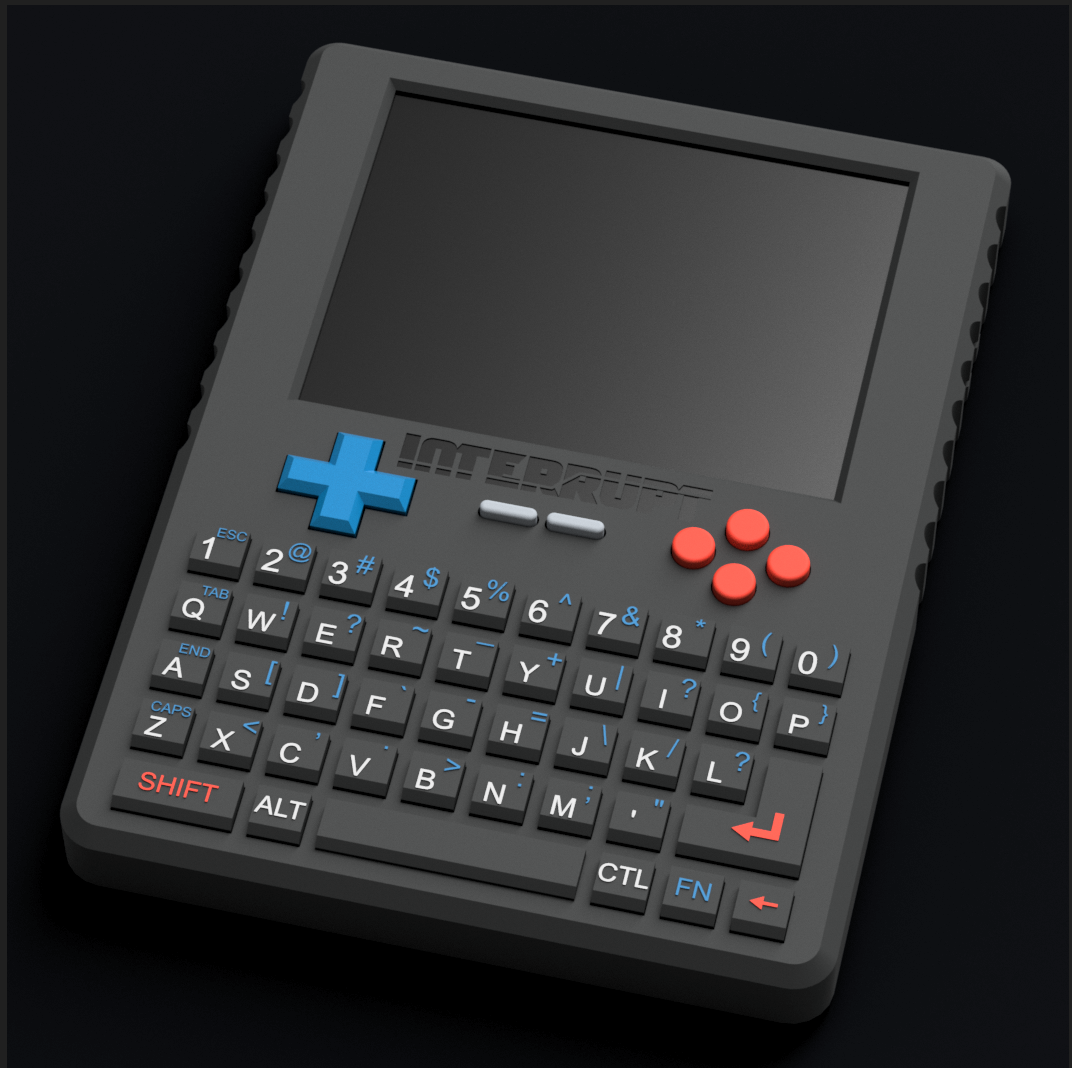
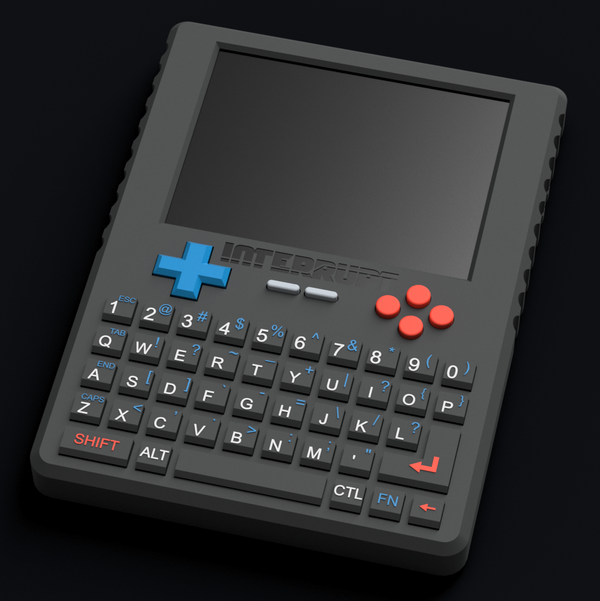
First off, we want to be transparent about where we are in the process and how that affects timing. In our original plan, we were aiming to ship in November based on the working prototype board we had at the time. As we’ve gone deeper into turning that prototype into a production-ready product, we’ve discovered a few critical areas—especially around the display and enclosure—that needed more engineering than we originally anticipated.
The good news is that the overall design is now largely locked in: the enclosure is nearly complete, the schematics are essentially finished aside from the new display. The main remaining design “puzzle piece” is the final production display and how it integrates electrically and mechanically.
We know this has introduced schedule slip compared to earlier dates we shared, and we’ve had some very direct conversations with our engineering partner to understand why and how to prevent similar surprises going forward. The outcome is a clearer, a path to complete the remaining mechanical, electrical, and firmware work and get to fully functional production units.
We really appreciate everyone’s patience as we push through these last major issues to make this device as solid and polished as it deserves to be.
1. Display Development
The display has turned out to be the single biggest driver of risk and delays.
- Why we changed displays:
The original prototype display had limited driver support on newer Linux versions and only supported 18-bit pixels over SPI. That meant each pixel required multiple transactions and would have resulted in a slow, laggy UI, especially at our target resolution. - New display approach:
We validated a new display and controller combination that works much better with the Raspberry Pi:- The new display uses an ST7796S driver.
- The driver will run the panel in parallel mode, which allows much faster pixel writes than pure SPI.
- Our engineering partner successfully tested this new setup and confirmed it behaves the way we need.
- What’s happening now:
- We’ve ordered multiple units of the new displays from different vendors to fully characterize them and avoid surprises later.
- Ensuring the display is not the bottleneck for UI speed and responsiveness.
2. PCB & Electronics Progress
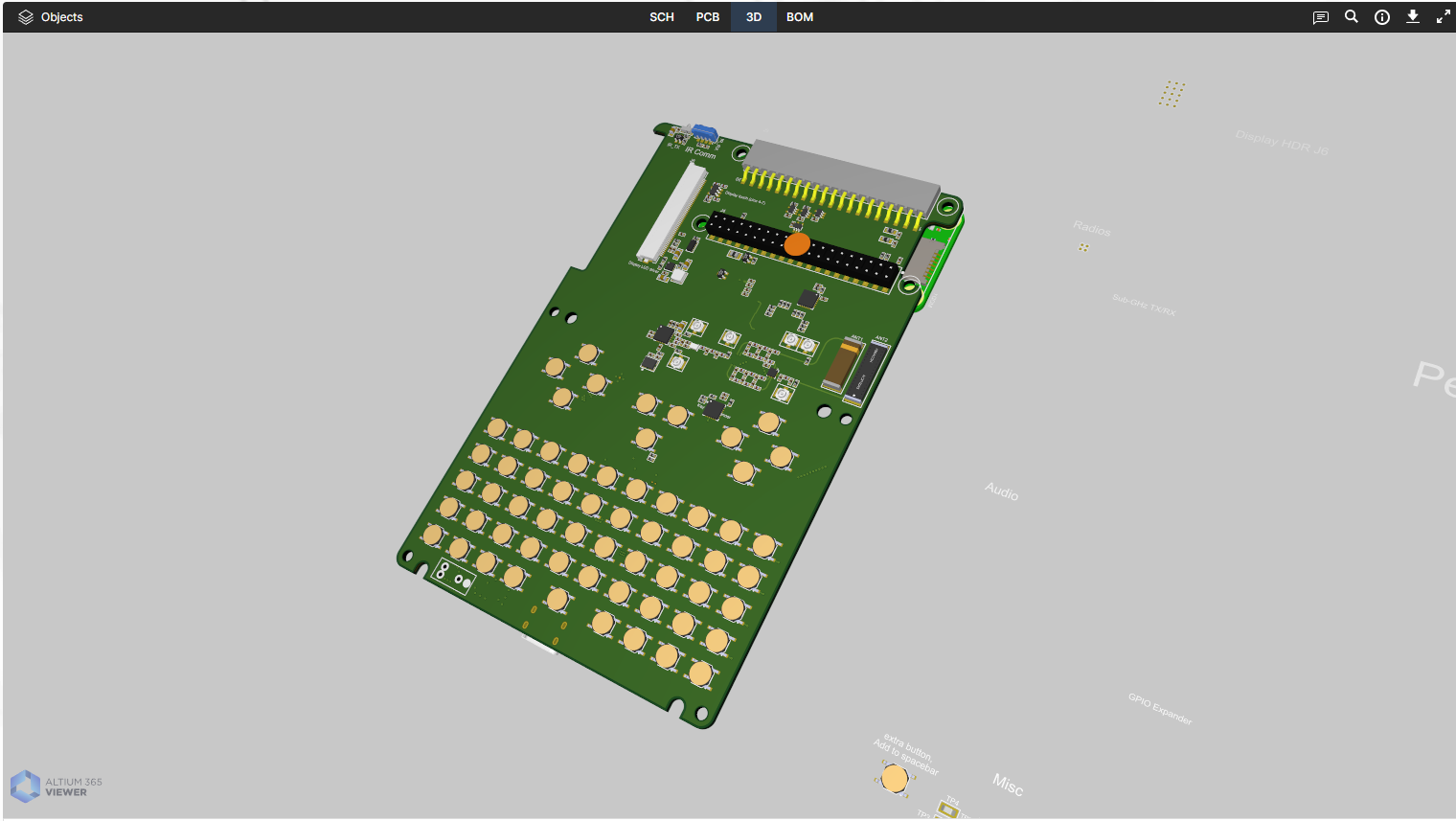
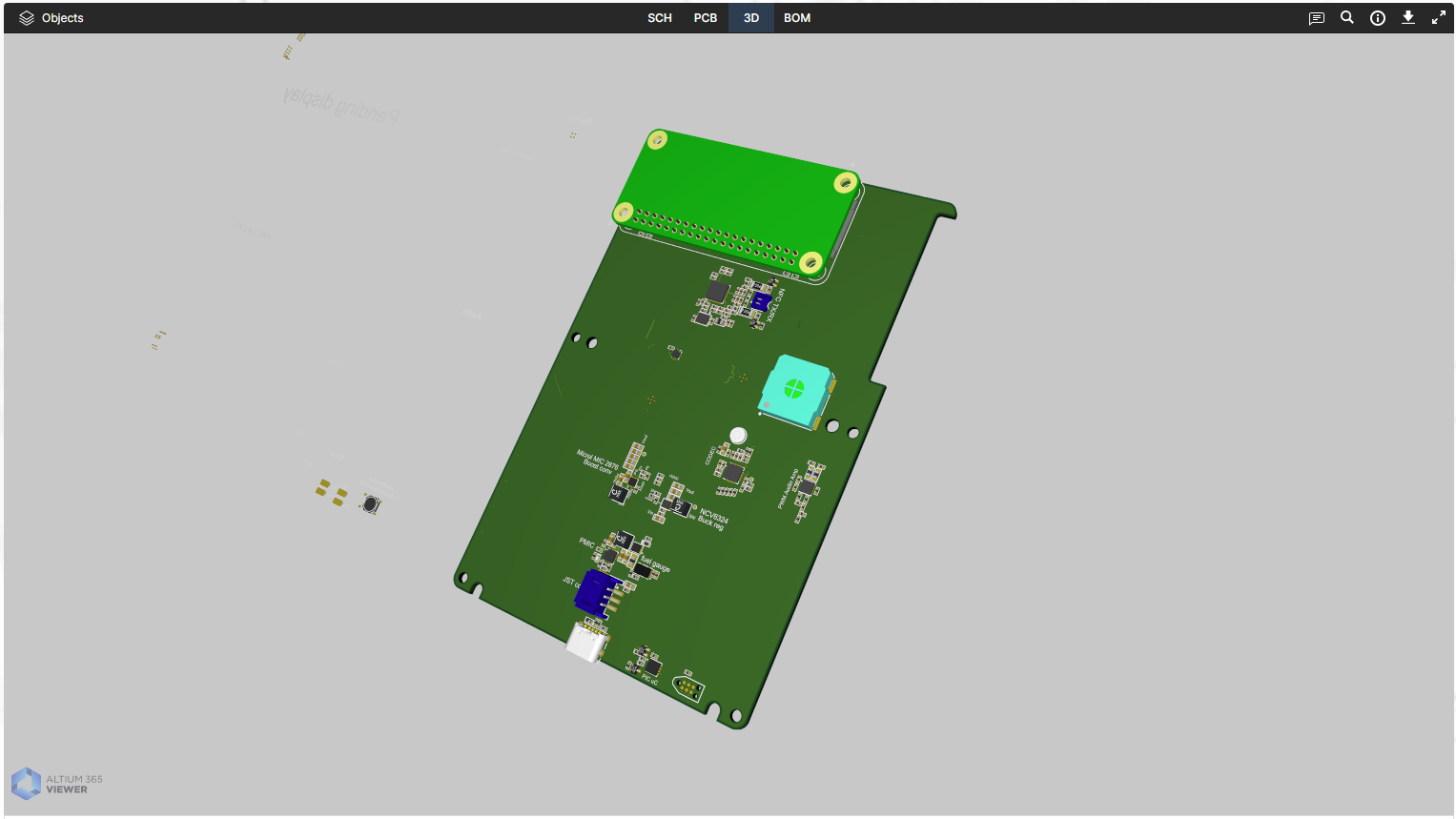
On the electrical side, most of the system is now in a very advanced state:
- Schematics:
- The schematics are essentially complete except for:
- The new display connector and
- The final peripheral logic for the display.
- The schematics are essentially complete except for:
- RF System & Antennas:
- Dedicated antennas for the RF bands are planned:
- 315 MHz and 433 / 868 / 915 MHz bands (as previously shared).
- RF matching networks will be tuned on the prototype boards:
- Some components will be manually populated/swapped during testing.
- This “tune on hardware” approach is faster and more reliable than purely theoretical design.
- Dedicated antennas for the RF bands are planned:
- Connectors & Layout:
- A 20-pin connector has been defined for I/O.
- Care is being taken not to break up SPI and I²C lines in the pinout to keep routing clean and signals reliable.
- The connector and PCB mounting are arranged between the Raspberry Pi’s mounting holes, with grounding and insulation buffers added to make it harder for users to accidentally short or “fry” anything.
- PCB Layout Status:
- PCB layout is roughly ~90% placed for everything except the display-related components.
- Final routing is being deferred until the new display and its logic are fully locked, to avoid rework.
3. Mechanical / Enclosure Development
Mechanically, we’re in a strong position but waiting on the final display and PCB details to avoid unnecessary re-spins:
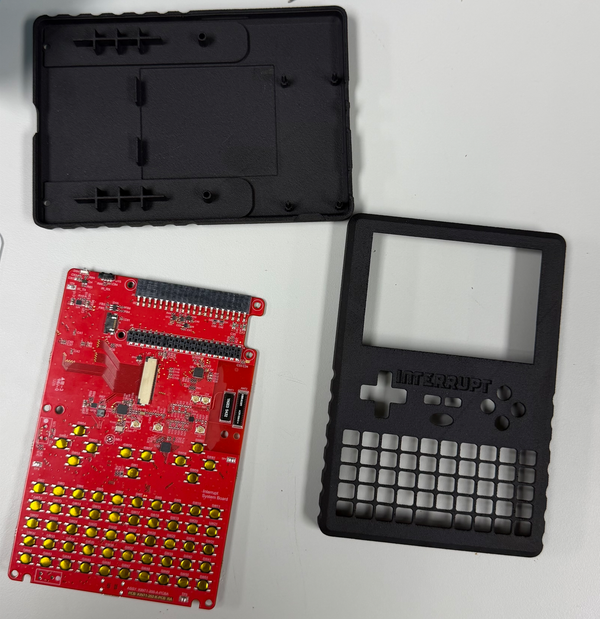
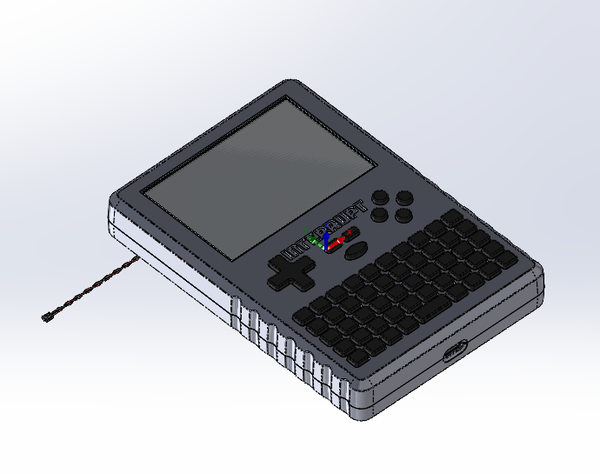
- The enclosure is ~95% complete, with remaining work focused on:
- Display mounting
- Cable bend radius and connector clearances inside the case
- The mechanical team is working hand-in-hand with the PCB layout team to:
- Align ports as cleanly and symmetrically as possible on the outside of the device.
- Minimize changes once the display is finalized.
4. Firmware & Feature Scope
Firmware is being handled in structured phases so we can de-risk the hardest parts early:
- Subsystem demos on dev kits – get key subsystems (display, NFC, RF, IR, etc.) running individually.
- Final GUI and application layer – tie everything together into the actual user experience.
5. Updated Timeline Snapshot
Because of the display change and related enclosure/PCB impacts, the milestones we previously shared have shifted by roughly 2–3 months. At a high level, we’re now targeting:
- Task / Phase - ETA:
- Final display selection & driver logic defined - Late 2025
- Schematic lock + PCB layout completion - Early Q1 2026
- Order & assemble pre-production boards - Mid-Late Q1 2026
Wrapping Up
This phase has involved more complexity than we expected—especially around the display—but the result is a much stronger, more future-proof hardware design with a faster screen, safer power and connector layout, and a clearer firmware plan.
We know this means waiting longer than anyone hoped, and we deeply appreciate your patience and support while we do this right. As we lock in the display and move into the pre-production hardware stage, we’ll share photos, videos, and more detailed looks at both the physical device and the UI running on real hardware.